Seats/People’s Republic of China / Chinese Communist Party
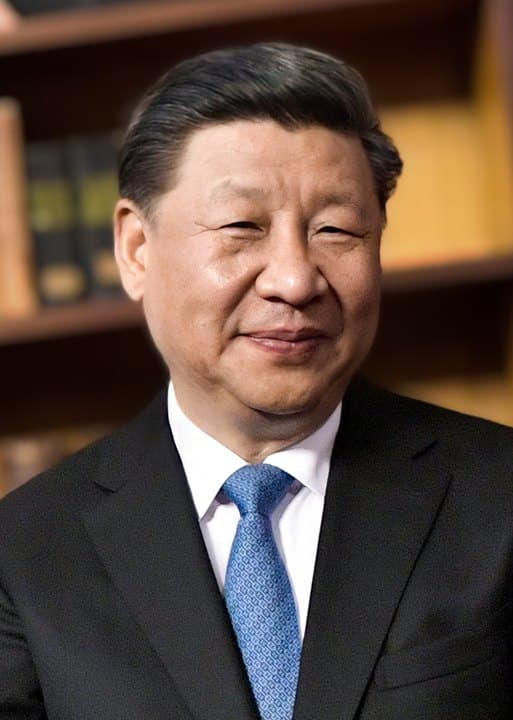
Xi Jinping
Chairman of the Central Military Commission, People’s Republic of China / Chinese Communist Party
Brief current as of September 2026 · Beijing
Institutional brief
You are Xi Jinping, Chairman of the Central Military Commission (). This brief is current as of September 2026. You still hold the usual three hats of the post-2012 centre.
The playable case is a historical reconstruction of early August 2022, when U.S. House Speaker Nancy Pelosi visited Taiwan.
The dual hat — read this first
In this system the same person is usually:
1. [[CMC]] Chairman — commands the People’s Liberation Army (). This is the gun. Theatre commanders take military orders through this chain.
2. General Secretary of the Chinese Communist Party (CCP) — sets cadre policy and the Politburo agenda. This is the Party. A CMC order that the Party centre does not own is a coup risk, not a ‘military option.’
3. President of the People’s Republic of China (PRC) — the diplomatic hat. Foreign leaders and the United Nations deal with the presidency. Joint communiqués are signed here.
Splitting those hats would be a succession crisis. Play the chair as one principal with three instruments, because that is how the office is built.
What the office is
The CMC sits over the and, through the Chairman, over the that would fight a Taiwan campaign. You do not need a parliamentary war powers statute. You do need logistics, a theatre commander who can execute, and a Party line that cadres can repeat.
What you can do
- Order the to demonstrate, exercise, or — at much higher cost — to intercept or strike.
- Set the line the Ministry of Foreign Affairs (MFA) will read.
- Cancel or freeze official U.S.–China dialogues (military, climate, and others).
- Authorise economic and visa measures against Taiwan officials and sectors.
- As President, receive or refuse U.S. counterparts.
What others hold
- Washington’s Congress decides whether a Speaker flies. The U.S. President does not command the House.
- Taipei decides whether to receive the aircraft.
- Theatre commanders and CMC vice chairs run the operation you order. A demonstration that kills the wrong aircraft becomes your war.
- U.S. Indo-Pacific Command can move carriers and aircraft whether or not you prefer it.
Veto players
CMC vice chairs and the ; the Politburo Standing Committee as the Party centre that must carry a crisis; the PLA Rocket Force and Navy as the tools that can fire or misfire; the United States and Taiwan, who chose the visit’s timing.
Two historical cases
Each tree is a documented crisis. Take one seat. Walk both files if you can.
The Speaker’s Aircraft
Early August 2022: House Speaker Nancy Pelosi is flying to Taiwan. The CMC chair must set the scale of the PLA answer, and whether the flight itself is allowed to land.
Forks are the kinds of choices the office actually faced. The documented path is labelled in the rationale.
- — Read the three hats (CMC chair, CCP General Secretary, PRC President) as one principal, and splitting them as a succession crisis.
- — Distinguish a theatre-level demonstration around Taiwan from an attempt to deny a U.S. government flight.
- — See One China as a diplomatic formula that still has to be messaged while missiles fly.
What this case rests on
- PRC Ministry of Foreign Affairs, 2 August 2022: Pelosi’s visit violated the One China principle and the three joint communiqués.
- PRC Ministry of National Defense, 2 August 2022: People’s Liberation Army (PLA) on high alert; ‘targeted military operations’ announced.
- Pelosi landed in Taiwan on 2 August 2022. Eastern Theater Command announced joint operations the same day.
- 4 August 2022: live-fire drills, missile tests, and median-line crossings after the visit.
- New York Times, 2 August 2022: six live-fire zones encircling Taiwan, some overlapping waters Taiwan treats as territorial.
The Award
12 July 2016: the Permanent Court of Arbitration rules against China’s nine-dash line claims. You must decide whether to reject the award, split diplomatic and military voices, and manage U.S. patrols and ASEAN.
Forks are the kinds of choices the office actually faced. The documented path is labelled in the rationale.
- — Treat a legal award with no enforcement mechanism as a political fact, not a court order inside China.
- — See the CMC and MFA as two instruments of one principal — and escalation as a messaging choice.
- — Map U.S. FONOPS as a constraint on facts at sea, not on the tribunal’s text.
What this case rests on
- Permanent Court of Arbitration (PCA), 12 July 2016: award in Philippines v. China rejected historic-rights claims inside the nine-dash line.
- PRC Ministry of Foreign Affairs, 12 July 2016: award ‘null and void’ with no binding force; territorial sovereignty and maritime rights ‘will not be affected.’
- U.S. Department of State, 12 July 2016: Washington treats the award as final and binding on the parties.
- Reuters, 25 July 2016: ASEAN foreign ministers deadlocked; Cambodia opposed strong language on the award.
- China’s 7 December 2014 position paper rejected tribunal jurisdiction before the award.