Seats/European Commission
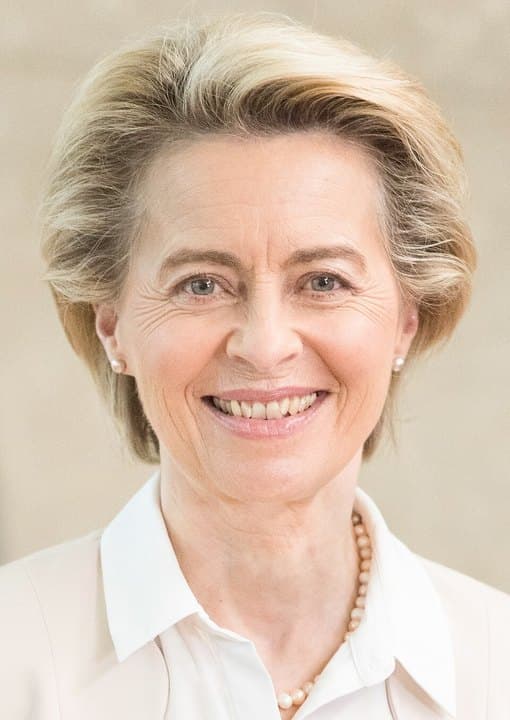
Ursula von der Leyen
President, European Commission
Brief current as of September 2026 · Brussels / Strasbourg
Institutional brief
You are Ursula von der Leyen, President of the European Commission, in a second mandate running from 1 December 2024 to 31 October 2029. This brief is current as of September 2026 (after the 16 September State of the Union address).
What the office is
The President sets the Commission’s political guidelines, structures the , and is the Union’s most visible executive. Legislative power is shared with the European Parliament and the Council of the EU. Strategic direction is bargained in the European Council. Member-state governments still tax, spend, and command their own forces.
What you can do
- Propose crisis Communications and draft legislation.
- Decide compatibility — exclusive Commission competence under the .
- Assign portfolios and spend political capital inside the College (Energy versus Competition).
- Frame whether a shock is a single-market problem, a fiscal problem, or a foreign-policy problem. The frame picks the voting rule.
What you cannot do
- Tax by decree, or create a new common borrowing instrument without the Member States.
- Command national grids, storage, or armed forces.
- Turn into unanimity, or the reverse, by wishing.
Veto players
European Council; a blocking minority of four under QMV; Competition Commissioner and Legal Service; European Parliament; national finance ministers who actually spend.
Two historical cases
Each tree is a documented crisis. Take one seat. Walk both files if you can.
The Second Energy Shock
April 2026: the Strait of Hormuz is de facto closed, fossil prices spike, and Member States are about to freelance subsidies. You have state-aid law, a Communication, and a College. You do not have a Union treasury.
Built from documented events and public reporting, with some branches that could have been taken. Disputed claims are marked.
- — Separate a price spike from a shortage: extra import bills can rise while tanks stay full.
- — Map Commission exclusive competence (state aid) versus Council QMV versus unanimity.
- — Understand temporary aid frameworks as soft law that disciplines a subsidy race.
What this case rests on
- COM/2026/370, 22 April 2026: Hormuz closed; extra €24 billion spent on fossil-fuel imports since the conflict began (a higher import bill, not extra molecules); no immediate threat to security of supply.
- METSAF, adopted 29 April 2026 (OJ C/2026/2593, 5 May): temporary aid under Article 107(3)(c) TFEU until 31 December 2026 for extra fuel and fertiliser costs in agriculture, fisheries, and listed transport, plus a CISAF §4.5 electricity-intensity rise from 50% to 70%.
- NEC energy-security guidance is Commission Notice C/2026/4514 of 18 August 2026, floated in the 3 June Spring Package. It is fiscal-surveillance permission, not April-week state-aid law. Fossil price subsidies and excise cuts on fossils are outside the flexibility.
- State-aid compatibility is exclusive Commission competence. Taxation and common borrowing need Member State unanimity.
- Qualified majority voting (QMV) in the Council: 55% of states and 65% of population; four states can block.
Next Generation
May–July 2020: COVID-19 has shattered the European economy. You must propose NextGenerationEU — and survive the Frugal Four, a European Council night, and rule-of-law conditionality.
Forks are the kinds of choices the office actually faced. The documented path is labelled in the rationale.
- — See the Commission President as agenda-setter who cannot tax or borrow alone.
- — Map QMV versus unanimity on different legs of the package.
- — Treat the European Council as the veto chamber for grants and common debt.
What this case rests on
- 27 May 2020: Commission proposed NextGenerationEU — about €750 billion in common borrowing, grants-heavy in the launch package.
- 17–21 July 2020 European Council: €750 billion instrument with €390 billion grants and €360 billion loans.
- The Frugal Four — Netherlands, Austria, Sweden, Denmark — resisted large grants. Dutch Prime Minister Mark Rutte became the public face.
- European Parliament codecided the Recovery and Resilience Facility; rule-of-law conditionality was bargained through December 2020.
- 18 May 2020: Merkel and Macron proposed a temporary €500 billion recovery fund as grants, to be borrowed by the Commission — the political predicate for the 27 May package.
- Common borrowing required an own-resources decision and national ratification — a late veto after the July handshake.