Seats/North Atlantic Treaty Organization
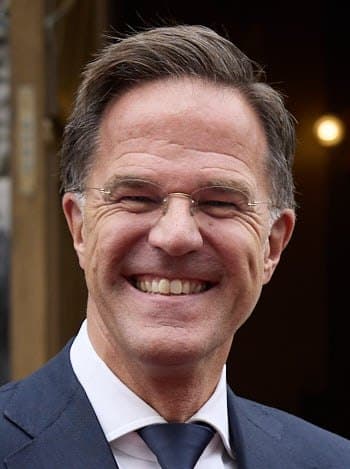
Mark Rutte
Secretary General, North Atlantic Treaty Organization
Brief current as of September 2026 · Brussels (NATO Headquarters)
Institutional brief
You are Mark Rutte, Secretary General of the North Atlantic Treaty Organization (NATO). You took up the post on 1 October 2024. This brief is current as of September 2026.
The playable case is a historical reconstruction of March–June 1999. Javier Solana held this office. The statutes and the consensus rule are those of that spring. You sit in the chair.
What the office is
The Secretary General chairs the North Atlantic Council (). You draft language. You use good offices. Member governments decide. You do not command forces.
covers armed attack on an Ally in the treaty area. Kosovo is . The Alliance is already in Bosnia under earlier Council mandates. That Bosnia mandate does not cover Serbia.
What you can do
- Convene the Council and test whether any Ally will object.
- Keep the legal file on the table: United Nations Security Council () resolutions already adopted, and the fact that Russia and China will veto a use-of-force resolution.
- Speak for NATO only when Allies have a common position.
- Ask Supreme Allied Commander Europe () for military advice inside a mandate the Council has already given.
What you cannot do
- Invoke Article 5. There has been no armed attack on a NATO member.
- Order an air campaign. executes a Council activation order. Nations generate the aircraft.
- Give the United Nations a veto it does not have over Alliance decisions — or invent a Chapter VII authorisation the will not pass.
- Ignore Greece, Italy, Germany, or a new member on the Hungarian border. Consensus is the rule.
Veto players
Any single Ally; the United States as the air-power backbone; Russia and China at the ; parliaments that must explain the first German combat since 1945, Italian basing at Aviano, and Greek public opinion.
Two historical cases
Each tree is a documented crisis. Take one seat. Walk both files if you can.
Allied Force
March 1999: Rambouillet has failed. Belgrade is expelling civilians from Kosovo. You chair an Alliance that is not under attack and does not have a UN use-of-force resolution.
Forks are the kinds of choices the office actually faced. The documented path is labelled in the rationale.
- — Separate Article 5 collective defence from an out-of-area humanitarian intervention.
- — See why a UN Security Council authorisation is blocked, and why Allies still argue about legality.
- — Treat consensus as a veto: Greece, Italy, Germany, and new member Hungary can stop ‘NATO as such.’
What this case rests on
- North Atlantic Treaty, Articles 4, 5, and 6 — collective defence of Allies in the treaty area. Kosovo sits outside that geography.
- UN Security Council Resolution 1199 (23 September 1998) demanded a halt to repression. It did not authorise force.
- North Atlantic Council statement, 30 January 1999: Allies warned of air strikes if Belgrade refused.
- Secretary General Solana instructed SACEUR on 23 March 1999 after a Council decision. Operation Allied Force ran 24 March–10 June 1999.
- UN Security Council Resolution 1244 (10 June 1999) authorised Kosovo Force (KFOR). That is the end-of-war legal hook.
Unified Protector
March 2011: UNSCR 1973 is on the books. Paris, London, and Washington are already flying. You must decide whether NATO takes the operation — and how wide the mandate is.
Forks are the kinds of choices the office actually faced. The documented path is labelled in the rationale.
- — See a UN-authorised, out-of-area operation that is still not Article 5.
- — Map the handoff from a national coalition (Odyssey Dawn) to a NATO command (Unified Protector).
- — Treat Turkey, Germany, and the U.S. ‘lead from behind’ line as veto players on mandate and assets.
What this case rests on
- UN Security Council Resolution 1973 (17 March 2011) authorised a no-fly zone and ‘all necessary measures’ to protect civilians. It forbade a foreign occupation force. Germany abstained.
- France, the United Kingdom, and the United States opened Odyssey Dawn on 19 March 2011 — before a NATO command.
- Secretary General Rasmussen announced on 27 March 2011 that NATO would implement all aspects of 1973. Unified Protector ran 23 March–31 October 2011.
- Obama, Cameron, and Sarkozy wrote on 14 April 2011 that Qadhafi must go. That sentence is a national op-ed, not a North Atlantic Council mandate.