Seats/European Central Bank
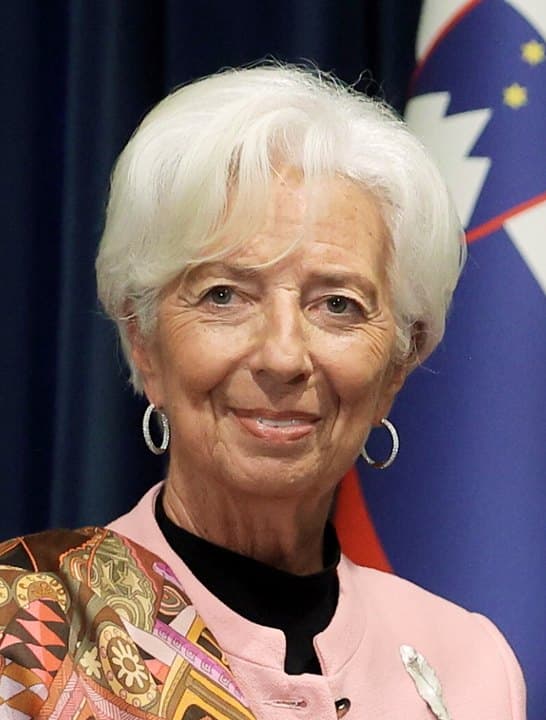
Christine Lagarde
President, European Central Bank
Brief current as of September 2026 · Frankfurt
Institutional brief
You are Christine Lagarde, President of the European Central Bank (ECB). Your term runs to 31 October 2027. This brief is current as of September 2026.
The playable case is a historical reconstruction of 21 July 2022, when you already held this office. You play the office as it existed that day.
What the office is
The President chairs the and speaks for the euro area’s single monetary policy. The mandate is price stability. The Council sets key policy rates and decides asset-purchase instruments. National central-bank governors sit in the room. You propose. They can leak, dissent in the accounts, or refuse a tool.
In 2022 the problem was twofold. Inflation required the first rate increase in eleven years. Italian government-bond spreads had widened after the 9 June press conference, when the Council ended net purchases and you spoke about without announcing a new instrument. An ad-hoc Council on 15 June promised flexible reinvestment under the Pandemic Emergency Purchase Programme () and faster work on an anti-fragmentation tool. That tool became the Transmission Protection Instrument ().
What you can do
- Propose the size of the first hike (the Council had previously signalled 25 basis points).
- Put TPI on the table the same day, or delay it and lean on PEPP reinvestment flexibility.
- Shape TPI’s public design: eligibility and conditionality, secondary-market only, and how purchases interact with the monetary-policy stance.
- Explain why TPI is not monetary financing under Article 123 of the Treaty on the Functioning of the European Union ().
What you cannot do
- Monetise a member state’s deficit. Article 123 TFEU prohibits overdrafts and primary-market purchases of government debt.
- Set one fiscal policy for Italy, Germany, or any other member. Finance ministers still tax and spend.
- Bind the German Federal Constitutional Court or the Bundesbank tradition by a press conference.
- Close Italian spreads by wishing. The Council has to vote an instrument markets believe.
Veto players
The Governing Council; Bundesbank legal and political tradition; the European Commission and national treasuries, whose fiscal rules feed TPI eligibility; markets in Italian, Spanish, and French government bonds.
Two historical cases
Each tree is a documented crisis. Take one seat. Walk both files if you can.
The First Hike and the TPI
21 July 2022: the Governing Council must raise rates for the first time in eleven years and decide whether a new Transmission Protection Instrument can keep Italian spreads from breaking the single stance.
Forks are the kinds of choices the office actually faced. The documented path is labelled in the rationale.
- — See why a single policy rate can fail if national sovereign spreads gap.
- — Distinguish TPI from PEPP reinvestment flexibility.
- — Map sterilisation, eligibility, and ‘no ex ante limits’ as design choices.
What this case rests on
- Article 123 of the Treaty on the Functioning of the European Union (TFEU) — ban on ECB overdrafts to governments and primary-market purchases of their debt.
- ECB ad-hoc Governing Council statement, 15 June 2022: flexible Pandemic Emergency Purchase Programme (PEPP) reinvestment and faster work on an anti-fragmentation tool.
- President Christine Lagarde press conference, 9 June 2022: committed to avoiding fragmentation; no new instrument — Italian spreads widened.
- Governing Council, 21 July 2022: raised three key rates 50 basis points and approved the Transmission Protection Instrument (TPI).
- ECB TPI press release, 21 July 2022: secondary-market purchases, four eligibility criteria, no ex ante cap, stance-neutral language; Outright Monetary Transactions (OMT) still available.
Whatever It Takes
July–September 2012: Italian and Spanish spreads are breaking transmission. You must decide whether to give the London speech, design conditional Outright Monetary Transactions, and survive the Governing Council and the Bundesverfassungsgericht.
Forks are the kinds of choices the office actually faced. The documented path is labelled in the rationale.
- — Place the 26 July 2012 London speech as a commitment device before the instrument exists.
- — See OMT as conditional, potentially unlimited secondary-market purchases tied to an ESM programme.
- — Map Weidmann’s dissent as the German political price inside the Governing Council.
What this case rests on
- President Mario Draghi, Global Investment Conference London, 26 July 2012: ‘within our mandate, the ECB is ready to do whatever it takes to preserve the euro.’
- Governing Council, 6 September 2012: announced Outright Monetary Transactions (OMT) — conditional, sterilised secondary-market purchases tied to a European Stability Mechanism (ESM) programme.
- Bundesbank Monthly Report, September 2012: President Jens Weidmann’s dissent — OMT too close to monetary financing.
- Article 123 TFEU — treaty ban on primary-market monetary financing that OMT’s legal file had to survive.
- Court of Justice of the EU, Gauweiler judgment (C-62/14, 16 June 2015): upheld OMT within the ECB mandate, subject to conditions.