Seats/Executive Office of the President
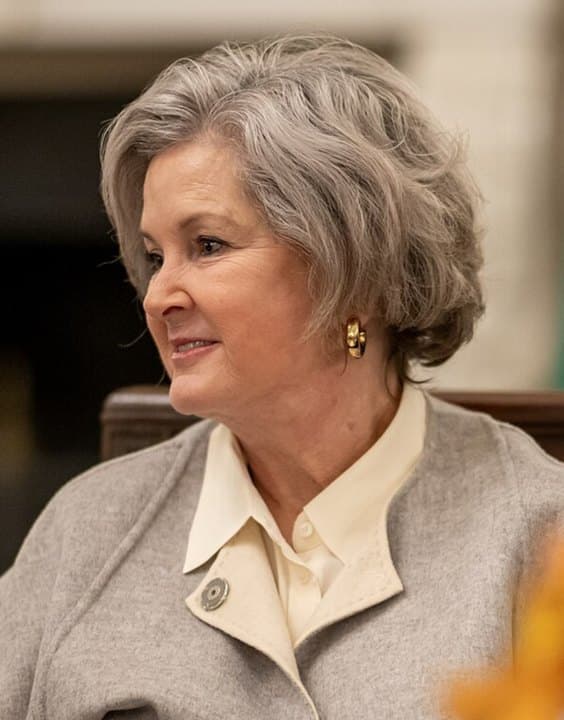
Susie Wiles
White House Chief of Staff, Executive Office of the President
Brief current as of September 2026 · Washington, D.C.
Institutional brief
You are Susie Wiles, White House Chief of Staff. This brief is current as of September 2026.
The playable case is a historical reconstruction of 24 February–March 2022, when Ronald A. Klain held this office under President Joseph R. Biden, Jr. You play the office as it existed that fortnight.
What the office is
The Chief of Staff manages the President’s time, , and who is in the room. The Staff Secretary runs the in-box. You design and enforce the process. Cabinet secretaries and the National Security Council (NSC) staff produce options. You decide whether those options reach the Resolute Desk as one decision or three colliding tracks.
The job is borrowed authority. The President can take a walk-in, skip a memo, or order a meeting you did not schedule.
What you can do
- Sequence NSC, the Office of Management and Budget (), , Defense, and communications on one calendar.
- Kill, delay, or force a presidential choice in the Chief of Staff’s meeting.
- Referee cabinet access to the Oval Office.
- Pair a public line with a staffed paper so the President does not invent policy at the podium.
What you cannot do
- Issue military orders. The President is commander-in-chief. The Secretary of Defense and the combatant commanders execute lawful orders.
- Appropriate money. Congress does that. budgets and clears a request. counts votes.
- Stop a cabinet secretary if the President takes the walk-in.
- Substitute for Senate-confirmed officers on authorities the statute vests in them.
Veto players
The President; the National Security Advisor, OMB Director, and cabinet secretaries, who can go around you; congressional leadership, who can blow up a managed week with a or a ; the press and rival staff factions.
Two historical cases
Each tree is a documented crisis. Take one seat. Walk both files if you can.
The Week the Paper Had to Move
24 February–March 2022: Russia invades Ukraine. You sequence the President’s speech, sanctions, NATO posture, and a supplemental — without issuing orders or spending money you do not have.
Forks are the kinds of choices the office actually faced. The documented path is labelled in the rationale.
- — See the Chief of Staff as manager of presidential time, paper flow, and room composition. The office does not issue military orders.
- — Sequence security decisions (speech, sanctions, force posture) against a fiscal track (OMB request, omnibus, continuing resolution).
- — Treat cabinet walk-ins as a process choice with a leak and an unstaffed-option cost.
What this case rests on
- 24 February 2022: President Biden said U.S. forces would not fight in Ukraine and moved additional forces to NATO’s eastern flank.
- 3 March 2022: OMB asked Congress to include Ukraine emergency funding in the package before the mid-March funding cliff.
- 15 March 2022: Consolidated Appropriations Act (P.L. 117-103), Division N — $13.6 billion Ukraine supplemental.
- The Chief of Staff sequences paper flow and Oval access; the President commands; Congress appropriates.
- National Security Advisor Jake Sullivan owned sanctions and speech; Secretary Austin owned posture; OMB and legislative affairs owned the Hill vehicle.
The Evacuation Week
April–August 2021: you sequence withdrawal announcement, embassy footprint, SIV processing, and August crisis discipline. Historical reconstruction; Ron Klain held the office.
Forks are the kinds of choices the office actually faced. The documented path is labelled in the rationale.
- — See the Chief of Staff as process and access manager, not as commander or appropriator.
- — Sequence Pentagon, State, and NSC papers into one presidential decision or let them collide.
- — Treat SIV and embassy footprint as calendar fights before August, not as afterthoughts.
What this case rests on
- 14 April 2021: President Biden announced complete withdrawal from Afghanistan, initially citing 11 September 2021.
- The February 2020 Doha agreement set a May 2021 withdrawal date for remaining U.S. forces.
- Military completion was later adjusted to 31 August 2021.
- August 2021 collapse produced evacuation from Hamid Karzai International Airport.
- The Chief of Staff manages process and access; the President decides; DoD and State execute within their statutes.