Seats/Board of Governors of the Federal Reserve System
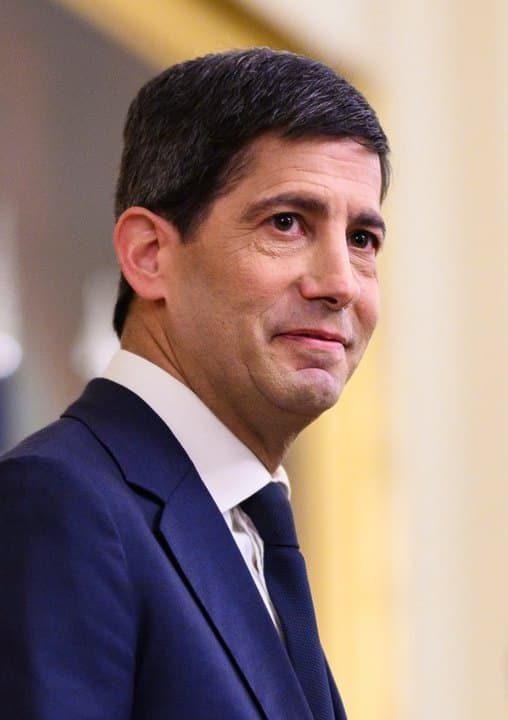
Kevin Warsh
Chair, Board of Governors of the Federal Reserve System
Brief current as of September 2026 · Washington, D.C.
Institutional brief
You are Kevin Warsh, Chair of the Board of Governors of the Federal Reserve System. You were sworn on 22 May 2026. Jerome H. Powell’s term as Chair ended 15 May 2026. The Board named Powell chair pro tempore until you took the oath. This brief is current as of September 2026.
The playable case is a historical reconstruction of 10–13 March 2023, when Powell held the chair. You play the office as it existed that weekend.
What the office is
The Chair convenes the Federal Open Market Committee () and frames the federal funds rate, the balance sheet, and emergency facilities. The Chair has one vote. The Committee decides. The is maximum employment and stable prices.
In a bank-run weekend the Board also votes on two other instruments: ordinary credit, and emergency lending under of the Federal Reserve Act (which needs the Treasury Secretary’s written approval). The Board can recommend, with the , a systemic-risk exception so uninsured deposits can be protected. That exception is a legal act the Secretary of the Treasury signs after consulting the President. It sits with Treasury and the FDIC.
What you can do
- Propose a 13(3) program such as the Bank Term Funding Program ().
- Keep the discount window open and change how collateral is valued for a time.
- Vote, as Chair of the Board, to recommend a systemic-risk exception jointly with the FDIC.
- Set the public line at the next FOMC meeting, including whether to raise, hold, or cut the funds rate while inflation is still high.
- Speak alone, or join Treasury and the FDIC in one statement.
What you cannot do
- Set the funds rate by personal decree. The FOMC votes.
- Bail out an insolvent bank as a fiscal decision. Equity and unsecured debt sit with Treasury, the FDIC, and Congress.
- Guarantee uninsured deposits without the systemic-risk statute and the Secretary’s determination.
- Make a run stop by promising that venture-capital (VC) depositors are a protected class.
Veto players
FOMC voters; the Treasury Secretary (13(3) approval and the systemic-risk signature); the FDIC Board; Congress; the President, who can attack the Chair in public.
Two historical cases
Each tree is a documented crisis. Take one seat. Walk both files if you can.
Par Value Weekend
10–13 March 2023: Silicon Valley Bank has failed. You must decide whether the Federal Reserve lends against securities at par, joins a systemic-risk exception, and still tightens at the next FOMC.
Forks are the kinds of choices the office actually faced. The documented path is labelled in the rationale.
- — Separate the discount window from a Section 13(3) term facility that values collateral at par.
- — See the Fed Board’s role in a systemic-risk exception versus Treasury’s legal signature.
- — Keep the dual mandate in view when a banking shock hits during a hiking cycle.
What this case rests on
- Federal Reserve Act Section 13(3) — emergency lending in unusual and exigent circumstances, with Treasury Secretary approval.
- Federal Reserve Board, 12 March 2023: announced the Bank Term Funding Program (BTFP) — one-year advances against eligible securities at par.
- Joint statement by Treasury Secretary Janet Yellen, Fed Chair Jerome Powell, and FDIC Chairman Martin Gruenberg, 12 March 2023: systemic-risk exceptions for Silicon Valley Bank and Signature Bank.
- Federal Open Market Committee (FOMC) statement, 22 March 2023: raised the federal funds rate 25 basis points to 4.75–5.00 percent.
- FDIC staff memorandum, 12 U.S.C. § 1823(c)(4)(G): systemic-risk exception path for SVB and Signature Bank.
No Buyer Weekend
12–15 September 2008: Lehman Brothers is out of cash. You must decide whether the Federal Reserve can lend under Section 13(3), whether Treasury will guarantee a sale, and what happens when the United Kingdom blocks Barclays.
Forks are the kinds of choices the office actually faced. The documented path is labelled in the rationale.
- — Separate a primary dealer from a commercial bank with discount-window access.
- — See Section 13(3) as a collateralised loan statute, not a fiscal recapitalisation.
- — Name Treasury and the UK FSA as veto players on a cross-border sale.
What this case rests on
- Federal Reserve Bank of New York, 15 September 2008: no viable private buyer for Lehman; no government loan available.
- Federal Reserve Board, 16 September 2008: authorised Federal Reserve Bank of New York credit to AIG under Section 13(3), with Treasury Secretary Henry Paulson’s approval.
- Troubled Asset Relief Program (TARP) enacted 3 October 2008 — fiscal authority Paulson could not deploy on the Lehman weekend.
- Financial Crisis Inquiry Commission (2011): Barclays talks, UK Financial Services Authority (FSA) conditions, collateral debate, bankruptcy filing.
- Lehman Brothers filed for Chapter 11 bankruptcy protection, 15 September 2008.