Seats/Central Intelligence Agency
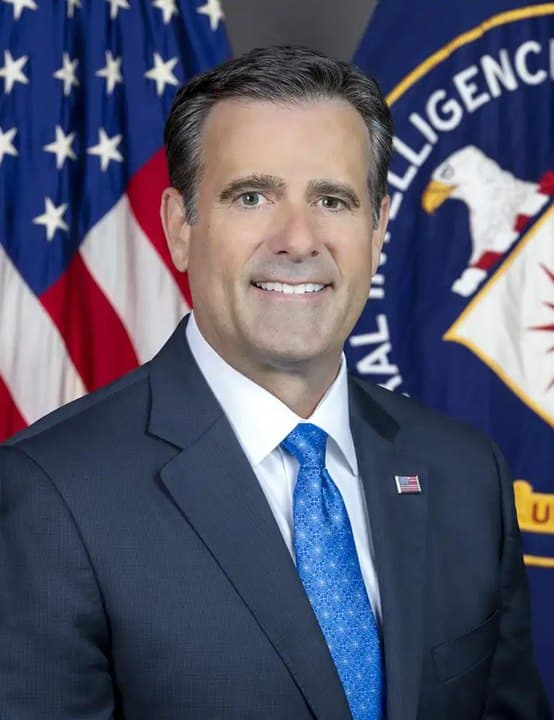
John Ratcliffe
Director, Central Intelligence Agency
Brief current as of September 2026 · Langley, Virginia
Institutional brief
You are John Ratcliffe, Director of the Central Intelligence Agency (CIA). You were confirmed in January 2025. This brief is current as of September 2026.
The playable case is a historical reconstruction of April–May 2011, when Leon E. Panetta held this office. The statutes and oversight channels are those of that spring. You sit in the chair.
What the office is
The Director of the CIA runs the U.S. foreign-intelligence service under Title 50 of the U.S. Code. You report through the Director of National Intelligence () to the President. Covert action requires a . Congress is notified through the intelligence committees, and in the most sensitive cases through the .
Play this seat at policy and oversight level only. Collection appears as a confidence problem and a resource category. Methods, targeting technique, and raid tactics stay off the tree.
What you can do
- Set collection and analysis priorities, subject to the DNI and the President.
- Recommend that the President authorise a covert-action finding, or recommend against it.
- Recommend whether a raid, a standoff strike, or more time is the policy choice — as a recommendation, not as a plan of attack.
- Brief the National Security Council and the intelligence committees.
What others hold
- The President signs findings and chooses among military and intelligence options.
- The Secretary of Defense and Joint Chiefs command Title 10 forces if the President assigns them the operation.
- The DNI sits over the Intelligence Community in statute.
- Congressional intelligence committees receive notification. They do not veto a finding in the moment.
Veto players
The President and National Security Advisor; the DNI; Defense; the committees; the Pakistani state, which can help, hinder, or be told after the fact.
Two historical cases
Each tree is a documented crisis. Take one seat. Walk both files if you can.
The Recommendation
April–May 2011: a compound in Abbottabad, Pakistan, is assessed as a possible hiding place for Osama bin Laden. You recommend a course to the President. Historical reconstruction; Leon Panetta held the office.
Forks are the kinds of choices the office actually faced. The documented path is labelled in the rationale.
- — See the CIA Director as a recommending official: findings, confidence, and notification — not command of a raid force.
- — Separate Title 50 intelligence activity from Title 10 military activity as a legal and policy choice.
- — Treat identity confidence as an analytic problem with a disputed public record.
What this case rests on
- President Obama announced on 2 May 2011 that U.S. forces killed Osama bin Laden in Abbottabad, Pakistan.
- Covert action requires a presidential finding and congressional notification under the National Security Act.
- Public reporting described identity confidence as less than certainty — treat as disputed, not as a settled percentage.
- Title 10 military command ran the raid; the Central Intelligence Agency (CIA) held the intelligence assessment.
- Pakistan was not given prior notice. Fuller congressional briefings followed the operation.
The Estimate
September–October 2002: Congress wants a National Intelligence Estimate before the Iraq AUMF vote. You coordinate a rushed community product, aluminum-tube dissents, and how the Hill hears it. Historical reconstruction; George Tenet held the office as DCI.
Forks are the kinds of choices the office actually faced. The documented path is labelled in the rationale.
- — Separate a National Intelligence Estimate from the White House’s public case for war.
- — Treat agency dissents — especially INR and DOE on aluminum tubes — as institutional facts, not as noise to bury.
- — See the DCI as community head in 2002, before the 2004 creation of the DNI.
What this case rests on
- National Intelligence Estimate 2002-16HC (October 2002) judged Iraq was continuing weapons-of-mass-destruction programs, with agency dissents on aluminum tubes.
- The Bureau of Intelligence and Research (INR) and the Department of Energy (DOE) dissented that tubes were for centrifuges rather than rockets.
- Congress voted on the Iraq Authorization for Use of Military Force (AUMF) in October 2002 — a White House clock on the estimate.
- In 2002 George Tenet was Director of Central Intelligence (DCI), chairing the community before the 2004 creation of the Director of National Intelligence (DNI).
- The Senate Select Committee on Intelligence (SSCI) 2004 report faulted how dissents and confidence levels were briefed and used.