Seats/U.S. Securities and Exchange Commission
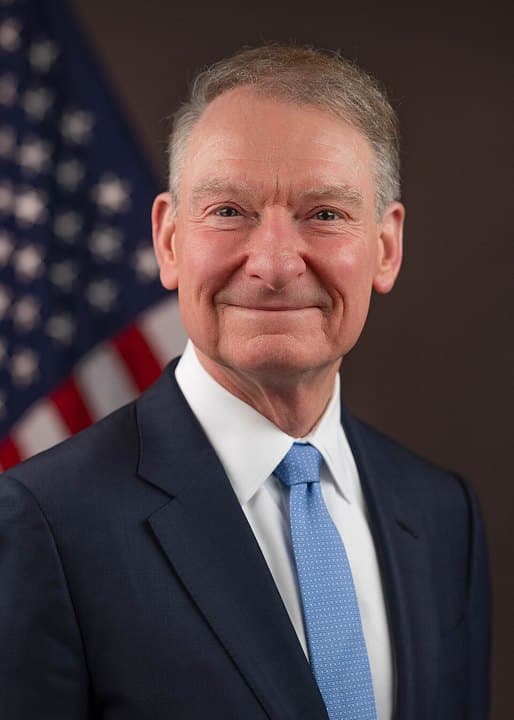
Paul S. Atkins
Chair, U.S. Securities and Exchange Commission
Brief current as of September 2026 · Washington, D.C.
Institutional brief
You are Paul S. Atkins, Chair of the U.S. Securities and Exchange Commission (SEC). You were sworn on 21 April 2025. This brief is current as of September 2026.
The playable case is a historical reconstruction of March 2020, when Jay Clayton held this office. You play the office as it existed that month.
What the office is
The Chair sets the SEC’s agenda on disclosure, market structure, and enforcement. Many emergency actions still need a Commission vote. Exchanges and self-regulatory organisations operate the matching engines. You oversee those rules. You do not type the halt.
What you can do
- Coordinate with exchanges on market-wide s when the S&P 500 index hits the Level 1, 2, or 3 thresholds.
- Consider restrictions, including a temporary ban, or rely on Regulation SHO Rule 201 (the alternative uptick rule).
- Grant issuer relief: reporting extensions, proxy-delivery relief, and conditions that run through .
- Keep, or pause, examinations and Enforcement while staff move to telework.
- Sit on the President’s Working Group on Financial Markets with the Treasury Secretary, the Federal Reserve Chair, and the Chair of the Commodity Futures Trading Commission ().
What you cannot do
- Inject liquidity. That is the Federal Reserve, with Treasury on emergency facilities. The SEC writes conduct and disclosure rules for securities markets. Say that as the constraint. If you pretend otherwise, you will own a tool you do not have.
- Ban short selling by personal decree if the Commission will not vote it, or if the legal basis under the is thin.
- Override accounting standard-setters on every point, or make banks stop marking prices.
- Ignore the other Commissioners. The Chair is first among equals on a five-member body.
Veto players
The other SEC Commissioners; the Federal Reserve and Treasury, whose liquidity tools dominate a dash-for-cash; exchanges and self-regulatory organisations; Congress and the courts.
Two historical cases
Each tree is a documented crisis. Take one seat. Walk both files if you can.
Circuit Breakers and 8-K Relief
March 2020: equities hit circuit breakers and the Federal Reserve is building facilities. You have disclosure relief, short-sale rules, and a working-group seat. Liquidity remains with the Fed.
Forks are the kinds of choices the office actually faced. The documented path is labelled in the rationale.
- — State the SEC’s constraint: it does not inject liquidity; the Federal Reserve and Treasury do.
- — Map market-wide circuit breakers as exchange rules the Commission oversees and coordinates.
- — Compare a U.S. short-sale ban with Regulation SHO Rule 201 and with EU national bans in March 2020.
What this case rests on
- 4 March 2020: Commission granted 45-day Exchange Act reporting relief conditioned on a Form 8-K from issuers that relied on it.
- Market-wide circuit breakers halted U.S. equities at the 7% Level 1 threshold on 9, 12, 16, and 18 March 2020.
- Chair Clayton on 30 March 2020: short selling should not be banned; rely on Regulation SHO Rule 201.
- 10 March 2020: Treasury convened the President’s Working Group with the Federal Reserve, SEC, and Commodity Futures Trading Commission (CFTC).
- Emergency liquidity came from the Federal Reserve and Treasury — not from the Securities and Exchange Commission (SEC).
The Emergency Order
17–21 September 2008: Lehman has failed; you propose Emergency Order 34-58592 banning short sales in financial stocks — or choose locate-close-out instead. Historical reconstruction; Christopher Cox chaired the Commission.
Forks are the kinds of choices the office actually faced. The documented path is labelled in the rationale.
- — See the SEC as a five-member commission where the Chair is first among equals.
- — Map Emergency Exchange Act orders to a vote, not to a personal decree.
- — Separate market-conduct tools from Federal Reserve liquidity tools.
What this case rests on
- 18 September 2008: SEC adopted Emergency Order 34-58592, temporarily banning short sales in roughly 799 financial stocks.
- The order required a five-member Commission vote under Exchange Act emergency authority — not a Chair’s personal decree.
- Lehman filed for bankruptcy; American International Group (AIG) received Federal Reserve support the same week.
- Later GAO and academic reviews found weak or mixed effects from the 2008 short-sale ban.
- Regulation SHO locate and close-out rules became the more durable policy track beside the temporary ban.